Changing tuning, scale length, or string gauge changes the feel of a guitar before the truss rod or bridge is adjusted. A tension calculation can make that change predictable, but only when it uses data for the actual string construction. Gauge by itself is not enough. Plain steel, nickel-wound, coated, round-core, and hex-core strings with the same diameter do not necessarily share the same Unit Weight. This guide explains the standard formula, shows how to compare a current setup with a target setup, and separates useful relative guidance from false claims of universal accuracy. It does not invent missing manufacturer data or label a configuration structurally safe.
01
The guitar string tension formula
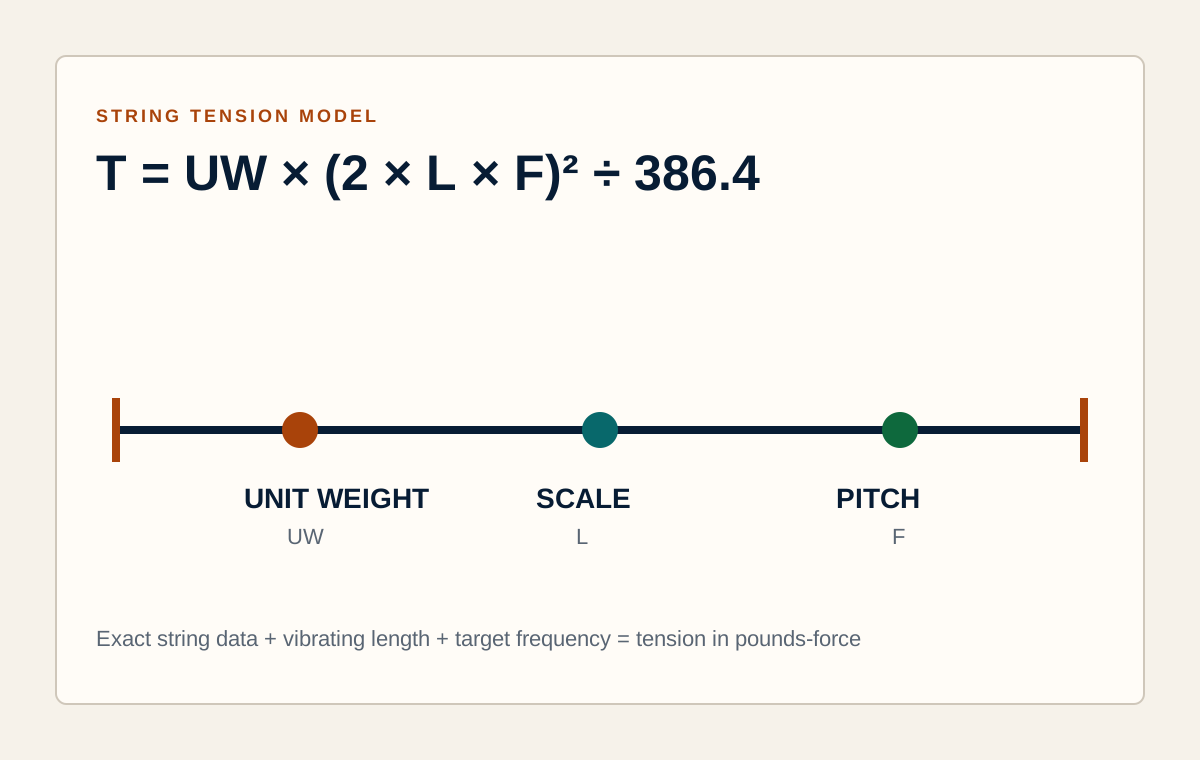
The standard imperial calculation uses Unit Weight in pounds per inch, vibrating length in inches, and frequency in hertz. The constant converts the resulting force into pounds-force.
Scale length and frequency are squared inside the formula. That is why a modest increase in scale or pitch can create a noticeable change, while simply comparing gauge numbers can miss the actual behavior of the string.
T = UW × (2 × L × F)² ÷ 386.4
| Symbol | Meaning | Required source |
|---|---|---|
| T | Tension in pounds-force | Calculated result |
| UW | Unit Weight in lb/in | Exact string construction data |
| L | Vibrating scale length in inches | Instrument measurement |
| F | Target frequency in hertz | Tuning and octave |
02
Why gauge alone cannot provide an exact result
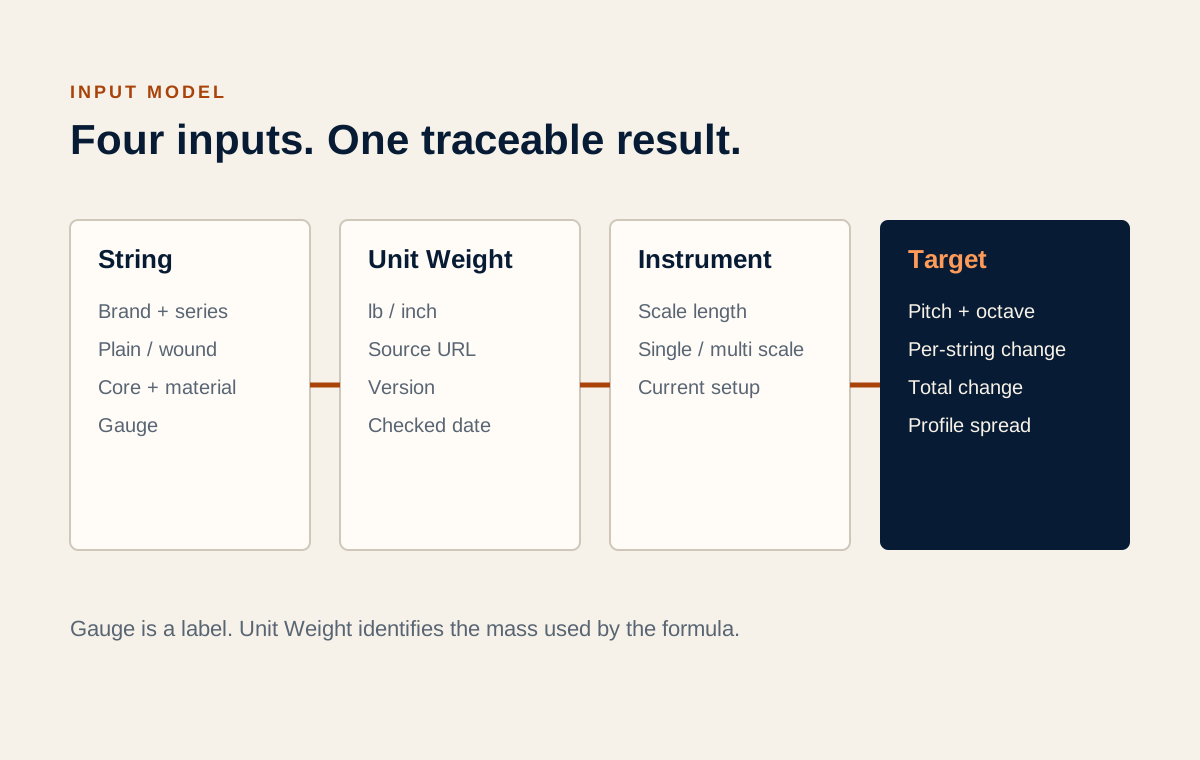
Diameter describes the outside size, not the distribution of mass. A wound string combines a core and wrap wire, and manufacturers vary core shape, material, wrap dimensions, coatings, and tolerances.
A generic estimator can be useful for rough comparison when it clearly states its model. It should not present that estimate as the official tension of another company’s product or silently mix data from different series.
03
Compare the current setup with the target setup
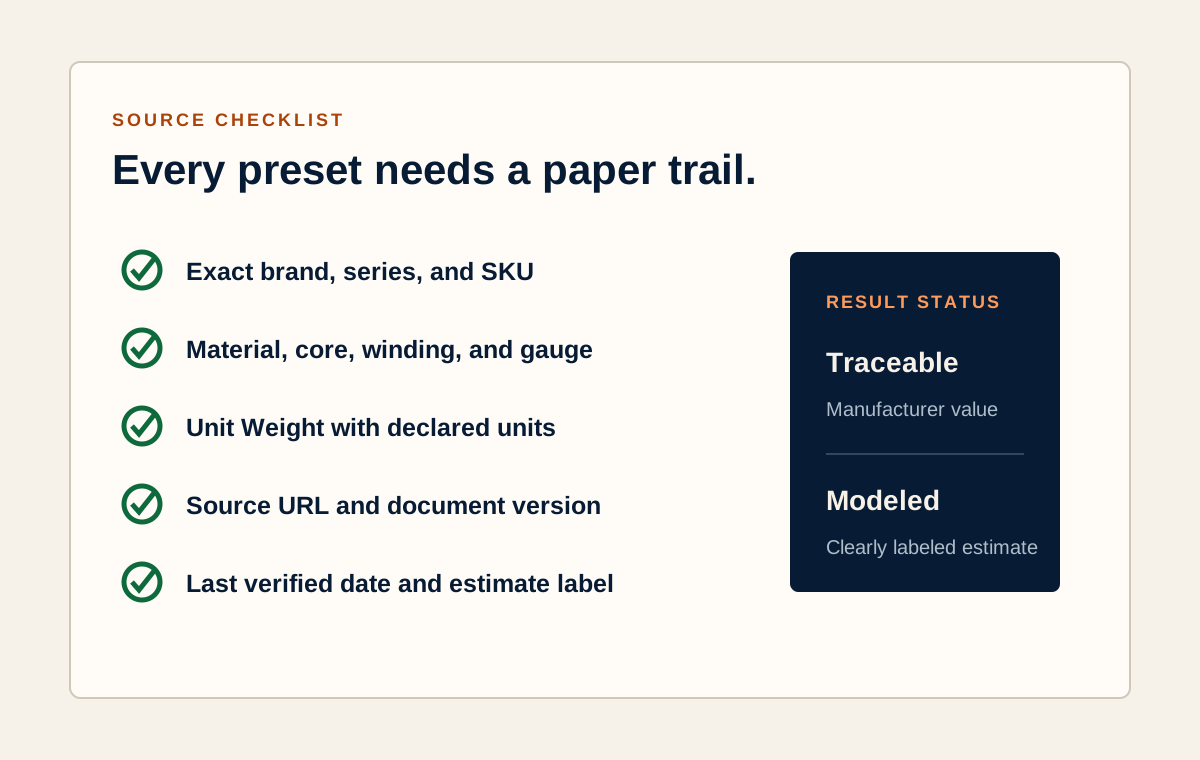
An isolated value such as 17 pounds does not tell you whether the new setup will feel familiar. Start with a configuration you already know, then compare each target string against its current counterpart.
For a lower tuning, the target gauge usually needs more mass to recover a similar tension. For a longer scale, the same string at the same pitch will produce more tension. The comparison should show both per-string change and total change without declaring a universal safe threshold.
| Output | Question it answers | Limit |
|---|---|---|
| Per-string change | Which string feels most different? | Does not describe construction safety |
| Total tension change | How much does the overall pull move? | Can hide an uneven set |
| Profile spread | Are neighboring strings balanced? | Feel remains player-dependent |
| Current vs target | Which gauge restores a baseline? | Depends on source data quality |
04
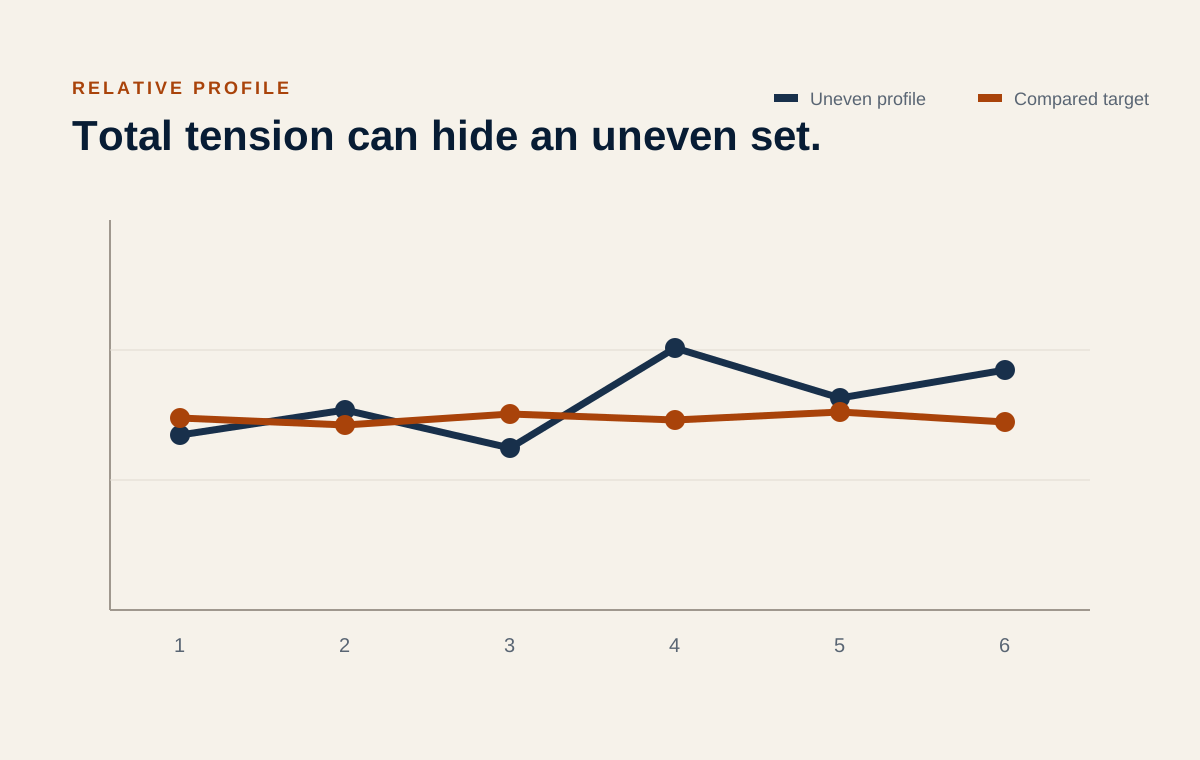
Read the tension profile, not only the total
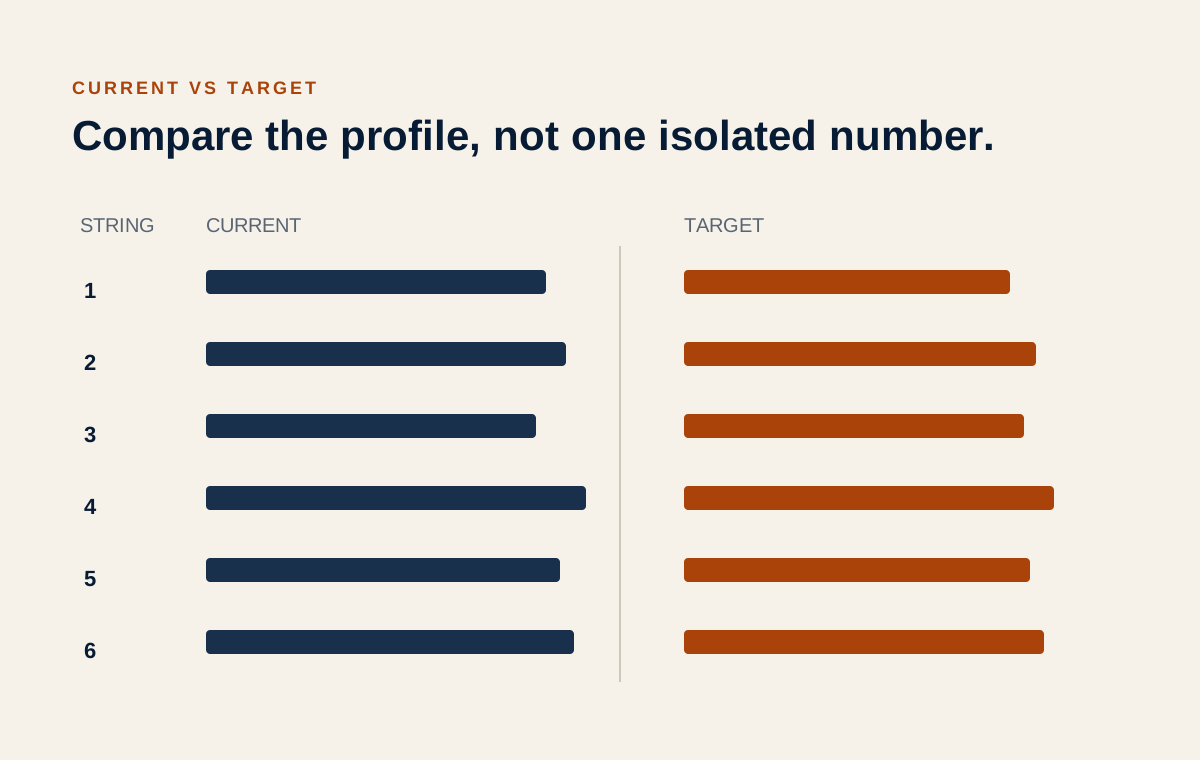
Two six-string sets can have nearly identical total tension and feel very different. One may place most of the difference on the wound strings, while another may have a stiff third string or unusually loose lowest string.
Look for abrupt jumps between neighbors and compare them with the familiar set. Balanced tension does not have one universal shape; some players prefer a firmer bass side, while others want each string closer to the same force.
05
What a trustworthy calculator should disclose
A reliable tool should identify where every preset value came from, when it was last checked, and whether the number is a manufacturer specification or an estimate. It should also state that tension is one part of setup—not a structural guarantee for a specific instrument.
For a brand-specific result, start with the string maker’s published data or calculator. Match the product series as well as the gauge, and keep the source alongside your setup notes. Musician Tools currently provides this guide, not a manufacturer-preset calculator.
Review how calculations, sources, and limitations are handled in the Musician Tools methodology before relying on any setup number.
FAQ
guitar string tension calculator FAQ
Does thicker string gauge always mean higher tension?
For the same construction, scale length, and pitch, a thicker string normally has greater Unit Weight and tension. Cross-brand or cross-construction comparisons still need exact data.
How does scale length affect guitar string tension?
With the same string and pitch, tension changes with the square of scale length. A longer scale therefore produces higher tension.
How does drop tuning affect string tension?
Lowering pitch reduces tension. A heavier gauge can recover some of the previous feel, but the correct comparison requires Unit Weight for the actual strings.
What is balanced string tension?
It describes how tension is distributed across a set. There is no single required profile; the useful goal is a deliberate, playable relationship between neighboring strings.
Can a calculator tell me whether a string set is safe for my guitar?
Not by itself. Instrument construction, condition, hardware, setup, and manufacturer limits matter. Use tension results for comparison and consult the instrument maker or a qualified technician when structural risk is uncertain.
Next step
Trust the source before trusting the decimal
Use tension as a comparison tool: document the current setup, obtain traceable Unit Weight data, calculate the target at the correct scale and pitch, then inspect both the individual strings and the whole profile. That process is slower than guessing from gauge, but it produces a result worth using.
Sources and calculation checks
These references explain the underlying relationships. Our examples are calculation checks, not claims of physical testing or an endorsement by these publishers.
- Our formulas, rounding rules, and reproducible examples
- Stringjoy: string construction and manufacturer-specific tension data
Found a discrepancy? Report the formula, expected result, and steps to reproduce.